

Editor’s note: This will be the final planned installment of our Beginner Series. I hope you have enjoyed reading it as much as I have writing it. I’m thinking of possibly writing an intermediate series at some point but I will have to be careful. I feel very comfortable writing this current series without having to look too much up and know that I am forwarding good information. For more advanced topics - even ones that I feel like I have a good handle on - I will do a bit of research before displaying it as truth. If you feel that I have missed on any beginner subject matter, please let me know and I’ll amend or add to this beginner series.
Table Presence
Sit down in a live poker tournament and it will be obvious to you who the new player is. He forgets the BB ante - fumbles with his chips - asks if the over sized chip is a raise. He is new to live play. There isn’t anything wrong with that as we were all new to live poker at one time or another. However, if you aren’t noticing the lack of experience from this player, it may be you who lacks experience at the table.
Be careful with this information as this player isn’t necessarily a bad player. There are plenty of online regs that have felt the need or desire to dip their foot in the live waters. There are also some players that try to forward an image that isn’t honest. Only a portion of the estimated weight of your “read” should be placed on the proverbial scale that would balance this situation. Sometimes we try to over exploit a read on a situation only to have it backfire on us. This is because every time we veer from a balanced strategy we open ourselves up to be exploited.
In this installment, we will discuss concepts to be aware of while sitting at the table and how to take advantage of them while limiting our exposure of being taken advantage.
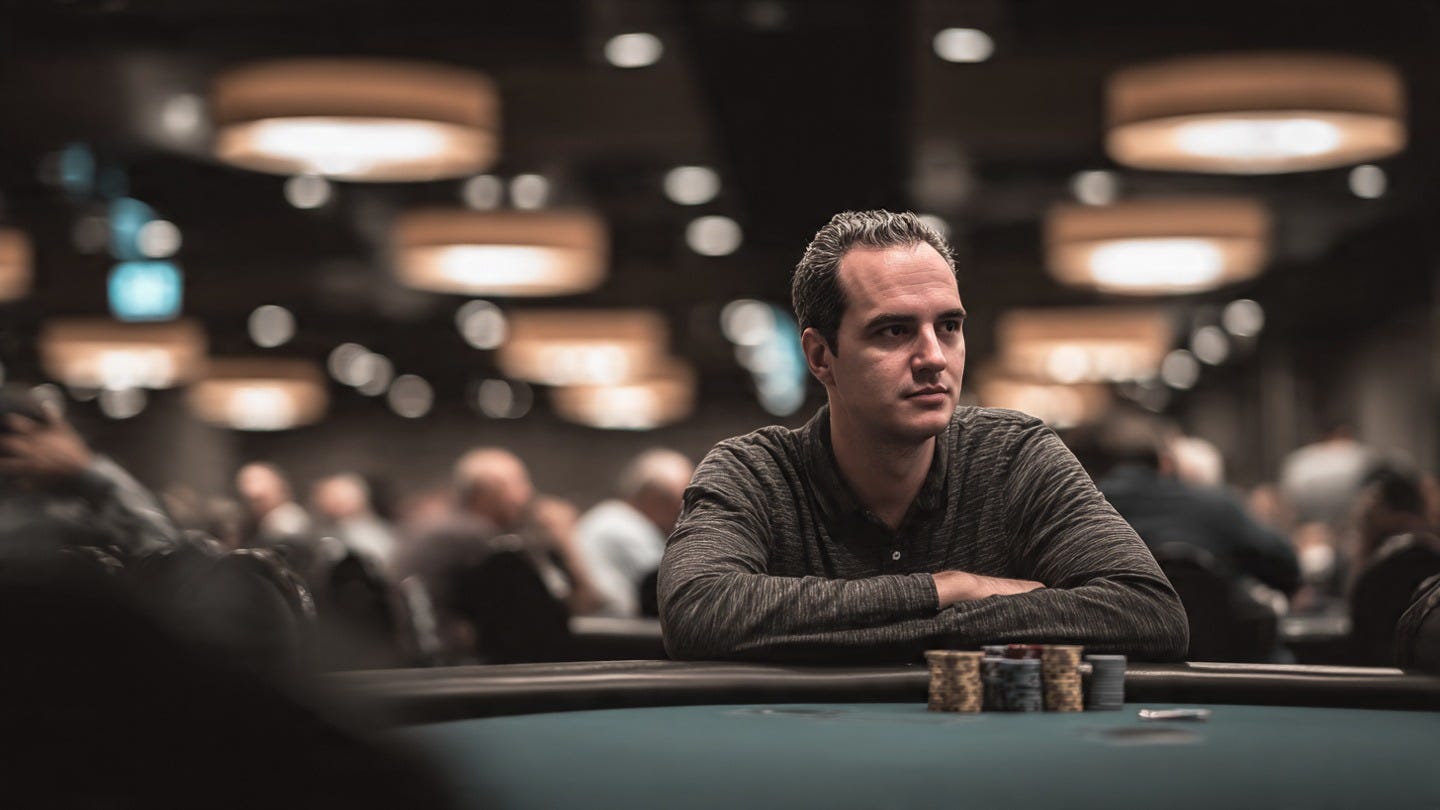
Table presence begins with being present. Being present is a big part of meditation. It grounds us and helps us achieve our goals by implementing the aspects of the game that we have studied so hard away from the table.
When I am at the table, I try to keep good posture. This helps me in several ways. It keeps my back inline which is a good healthy habit. It keeps me from changing my posture mid hand - we have all seen the slouch at the table suddenly sit up in his seat when he looks at hole cards that he is very interested in. Most importantly, while I keep good posture, it is easier for me to be mentally and physically present. This includes being in flow with my timing and movements.
When I keep good posture, I am able to watch the action without shifting my body around. I can keep an eye on the action and make my actions while basically only moving my head, one arm, and a hand. Finding rhythm and flow - I find - keep me from figiting in my seat, shaky hands, irregular breathing patterns, and unnecessary facial expressions. Not only are these things unwanted signs for my opponents to read. I end up paying attention to my unwanted bodily reactions instead of focusing my attention on the game and my opponents.
Along these lines, it is also important know what you want to do before you do it. I see players that look like they are ready to fold then decide to call. Unless I read that this player is being tricky, I see this as weakness that doesn’t want to fold quite yet. When a non scare card hits the board next, I green light myself to bet again on the next street and take down the pot no matter what I have.
To avoid this fate, know what you are going to do before you make a physical action.(i.e. mentally decide to bet 2500 on this betting round BEFORE reaching for the chips). When you do make the physical motion, repeat the same movements each time you make that action. There isn’t a good reason to place chips in the pot with your right hand and then switch to your left hand later. Get a system and stick with it.
Timing is another variable of your game that you should try to control. If your opponent sees you call a bet quickly, she may infer that you didn’t even consider raising. This caps your range - at least in her eyes - and changes the game tree for the rest of the hand. By trying to take a similar amount of time with your decisions, your opponent will not be able to box you in to a draw or capped range.
Even preflop - take 3-5 seconds to make your decision. This is about the same amount of time it should take to decide to call or raise and doesn’t slow the game down significantly.
When facing a bet and deciding to fold, don’t let your opponent off the hook immediately either. Think about the times that you make a river bet bluff and your opponent tanks. This probably makes you feel uncomfortable. Well…. you want your opponents to feel the same way as much as possible. They are going to win this hand but you are going to give them a feeling that they don’t necessarily want to feel in the next hand against you.
Being polite at the table is always a good idea. However, being polite and being a pushover are 2 different things. When you start getting talked up, have a plan to not share more than you would like. When someone thinks they have a skill advantage over his table mates, that’s when it is in his favor to talk the table up. Finding out someone’s hometown lets him know how far you traveled and whether this is a destination tournament for you - and therefore perhaps you are reluctant to bust.
Finding out if a man is married, lets the questioner know that the man has someone whom he may want to impress or be held accountable to when it comes to cashing the tournament. These pressures can be used at appropriate times to a person’s advantage. If it is almost the end of the night and you know your opponent has a flight tomorrow, it is you that should be careful. This person is likely to get very cozy with risk towards the end of the session when you hear him say something like: “If I have to change my plane ticket and get another hotel night, I may as well have chips for tomorrow”.
So how can we avoid sharing more than we want? Pretending to not speak English well is a good way as long as you don’t mind the discomfort when the talker finds out otherwise when your friends sidle up to the table. Bringing headphones is another way but keep you from hearing everything being said at the table. I think earbuds that aren’t being used are one of the best ways. Just make sure to feign annoyance each time you “have to” take one out of your ear to hear the speaker.
Sometimes you find yourself in a poker tournament in a great situation. You have the chip lead, the aggressive players are to your right, and people are respecting your opens and 3 bets.
Too often though, the situation isn’t as rosy. When the aggression - and big stacks - are on your left and big bets are flying left and right and you are stuck with an average stack, things can feel bleak. Rest assured there are tweaks you can make in every situation. Tighten up your opening range, sizing up a bit, and targeting the more passive players after the aggros have folded are great ways to handle this. The key is to slow down your play. Literally. When in a tough situation, you want to see as few hands as possible in this lineup. When we slow things down, a few good things can happen while seeing fewer hands than we would have at our normal cadence. I wouldn’t advise overdoing this. Maybe increase your action time from 3 seconds to a 7 second count. This doesn’t sound like much but people sometimes fall in line with timing and It makes you “feel” like you are doing something active to address your situation.
Keep an eye on the pattern which they are breaking tables. Typically larger number tables are broken and the field is condensed into the smaller numbered tables. Sometimes, its breaking tables on one side of the room in favor of the other side. Just keep an eye on the general pattern and how much longer you are likely to be in your current situation.
When it is obvious that your table will be broken next, slow playing early positions and fast playing late positions makes the most sense in order to maximize the possibility that you avoid playing from the big blind more than is absolutely necessary.
On the other hand, when we do find ourselves in a good situation, we want to keep the fun rolling and see as many hands in this configuration as possible.
Sometimes we come across an angle shooter or a rude person at the table. I suggest handling these things as necessary and depending on the intent. Never be afraid to call the floor on someone you think is taking advantage of the rules, the dealer, or other opponents. If someone does something that you think is wrong, ask the dealer if it is allowed. If the dealer has lost control of the table and or the aggressor, call the floor and register your verbal complaint. At the very least, the aggresor will know that people at the table are watching and listening.
Keep in mind that sometimes the person not following protocol simply is new to the game. Perhaps they don’t know to put the big chips on top or that you shouldn’t fold out of turn. I find that keeping quiet and letting others correct the new player is less confrontation and opponents that correct or “help” others are a breed that can be profiled as well.
Making sure we are telling the story we want with our presence at the table and not sharing our insecurities, fears, and unpleasant thoughts is a big part of the live game.
Without saying a word - tell you opponents you are dialed in, prepared, fearless, and smart by showing your prowess with your nonverbal actions and table presence.